
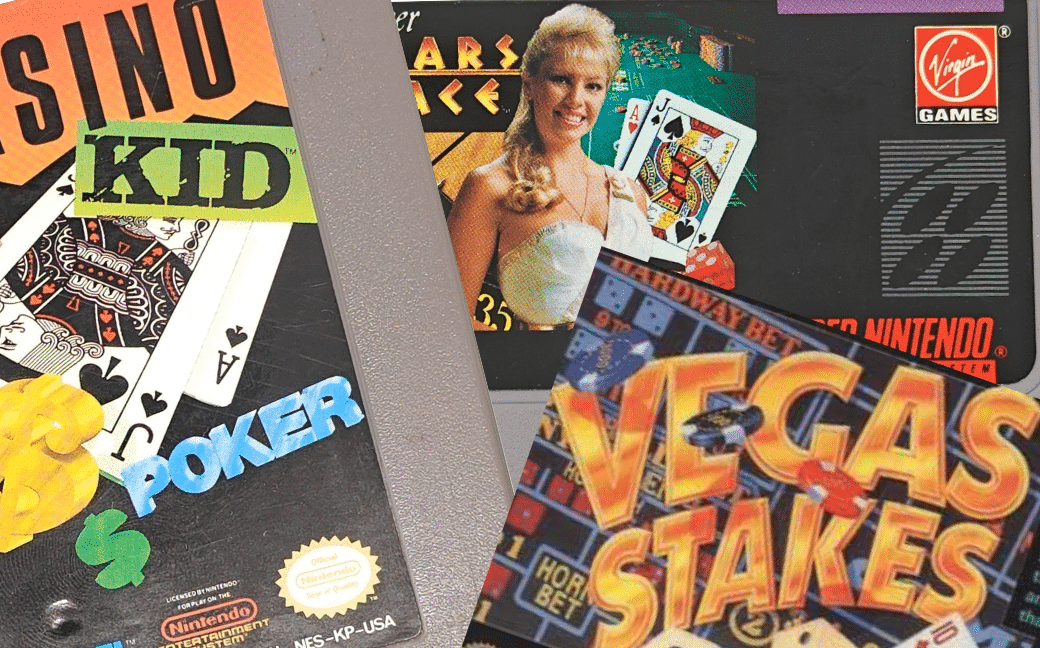
Vegas Stakes Brought Casino Floors to Living Rooms
Vegas Stakes appeared on both NES and SNES consoles, though the 16-bit version included better graphics and more gambling options. Players started with $1,000 and worked through five different casinos, each with higher betting limits. The Hideaway allowed $1 minimum bets while the Laurel Palace required $10,000 antes. Between hands, random characters approached players with suspicious investment opportunities or hard luck stories asking for loans.
The SNES version added roulette and craps alongside the poker tables. Players could save their progress and return to their bankroll later, something unusual for casino games at the time. The game tracked statistics including biggest pot won, total earnings, and number of royal flushes. Once players earned $10 million, they gained access to a special ending sequence showing their character’s success.
Casino Kid Mixed Fighting Game Elements With Five-Card Draw
Casino Kid took an unusual approach to poker gameplay on the NES. Instead of simulating a realistic casino, the game presented poker as battles against cartoon opponents. Each enemy had specific tells and betting patterns players needed to learn. The Blackjack dealer always folded when holding less than a pair of tens. The slots player bluffed aggressively but backed down against large raises.
Players traveled through a fictional casino city, earning money to face stronger opponents. The final boss required a $30,000 buy-in and played nearly perfect poker. Between matches, players could spend winnings on hints about upcoming opponents or items that revealed enemy cards. The sequel, Casino Kid 2, expanded the formula with travel to different countries and regional poker variations.
Card Game Ports That Never Made It West
Nintendo’s regional release decisions left many card-based titles in Japan during the 8-bit and 16-bit era. While western markets received Vegas Stakes and Casino Kid, Japanese players had access to Honke Hanafuda and several mahjong variations that combined traditional rules with RPG elements. These unreleased poker games featured character progression systems where winning hands unlocked new opponents and tournament brackets.
The language barrier wasn’t the only factor keeping these titles from international shelves. Publishers assumed western audiences preferred straightforward casino simulations over the story-driven card games that sold well in Japan. Pachio-kun Special and Trump Island mixed poker mechanics with adventure game elements that later appeared in titles like Puzzle Quest.
Super Casino 2 Focused on Tournament Play
Super Casino 2 on the SNES structured its poker games as elimination tournaments rather than cash games. Players entered brackets with seven computer opponents, each programmed with distinct playing styles. Conservative players folded most hands while aggressive opponents raised frequently. The AI adjusted its strategy based on chip stacks and tournament position, making late-game play particularly tense.
The game included Texas Hold’em, Seven Card Stud, and Omaha variants. Each tournament type required different strategies since the AI opponents played differently across formats. Graphics showed detailed card animations and chip movements that made following the action easier than text-based displays. Sound effects changed based on pot size, with larger bets producing louder chip clinks.
King of Casino Simplified Poker for Younger Players
King of Casino on the Super Famicom presented poker through a simplified interface designed for players unfamiliar with standard rules. The game automatically highlighted winning hands and suggested optimal plays during the learning mode. Characters spoke in text bubbles explaining their decisions, teaching basic concepts like pot odds and position.
The story mode followed a young gambler trying to become the city’s best player. Each district featured three to five opponents with increasing skill levels. Beating all opponents in an area unlocked the district boss, who played with special rules like wild cards or doubled blinds. The game included 30 different opponents total, each with unique dialogue and playing patterns.
Super Caesar’s Palace Replicated Atlantic City
HAL Laboratory developed Super Caesar’s Palace to recreate the actual casino’s layout and games. The poker room contained multiple table types including low-stakes limit games and high-roller no-limit tables. Players walked through a 3D-rendered casino floor to reach different game areas, with ambient sound effects matching real casino environments.
The poker simulation tracked detailed statistics across sessions. Players could review their hand histories, see their win rate at different stakes, and analyze which starting hands earned the most money. The game penalized poor bankroll management by forcing players to return to smaller stakes after losing their chips at higher levels.
Later SNES Titles Added Production Values Without Depth
Peak Entertainment’s Vegas Stakes sequel and Gambling Hourouki focused on presentation over gameplay improvements. These late-generation SNES releases featured full-screen character portraits and voice samples but simplified the actual poker mechanics. Opponents made predictable decisions based on hand strength without considering factors like table position or betting patterns.
Some titles attempted to combine poker with other genres. Poker Face Paul’s series mixed poker hands with puzzle game mechanics where players arranged falling cards to create winning combinations. These hybrid designs often satisfied neither poker fans nor puzzle game players, resulting in poor sales and limited distribution.
The best poker games on NES and SNES succeeded when they focused on either accurate simulation or creative gameplay twists. Vegas Stakes and Super Caesar’s Palace delivered realistic casino experiences within hardware limitations. Casino Kid and King of Casino proved that poker games could work as adventure titles with proper execution. The technical constraints of 8-bit and 16-bit systems forced developers to choose specific strengths rather than attempting to excel at everything.